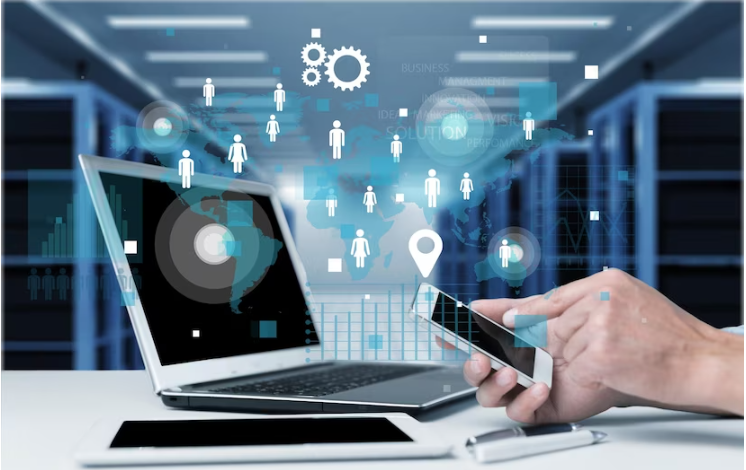
In the rapidly shifting landscape of 2026, the traditional boundaries of human resources have expanded into the realm of ‘People Experience Orchestration.’ Organizations no longer just manage employees; they facilitate complex, tech-enabled journeys for a global, hybrid, and multi-generational workforce. From the first touchpoint in talent acquisition to the final stages of offboarding, the need for meticulous digital coordination has never been more critical for sustaining competitive advantage.
Traditional HR models often struggle to keep pace with the velocity of modern business, where manual workflows and fragmented data create bottlenecks. When HR functions operate in silos, the resulting administrative friction diverts leadership focus away from strategic innovation and core business growth. This is where modern Employee Lifecycle Management (ELM) platforms like MYNDHRX provide a framework for operational excellence.
By leveraging advanced automation and integrated data architecture, organizations can now transition from reactive administration to proactive strategy. The focus has shifted toward building a ‘skills-first’ organization where data-driven insights allow HR leaders to identify talent gaps, foster continuous learning, and implement retention strategies that resonate with a modern workforce. With customizable workflows and real-time analytics, businesses can optimize resource allocation and reduce the heavy administrative burden that once defined the HR function.
The 2026 Paradigm Shift: From Management to Experience Orchestration
As we navigate the workplace of 2026, the focus has moved beyond simple process efficiency toward ‘hyper-personalization.’ Modern ELM systems now utilize predictive analytics to anticipate employee needs before they arise. Whether it is recommending a specific development module based on performance trends or streamlining cross-border compliance for remote teams, the goal is to create a seamless, invisible HR infrastructure that supports high-performance cultures.
Navigating Modern Challenges in Employee Lifecycle Management:
- The Data Fragmentation Gap: A significant hurdle for modern enterprises is the disconnect between disparate HR tech stacks. This fragmentation leads to ‘data islands’ where employee information is inconsistent and difficult to aggregate. Without a single source of truth, HR departments face inefficient workflows and the inability to generate the real-time insights necessary for agile decision-making.
- Transitioning from Manual to Cognitive Automation: Outdated, manual processes are more than just slow; they are a risk factor in 2026. Leveraging cognitive automation—which goes beyond simple task repetition to handle complex data validation—is essential to reduce human error in payroll, compliance, and records management, allowing HR professionals to focus on high-impact cultural initiatives.
- Supporting the Ubiquitous Workforce: The ‘mobile-first’ expectation has evolved into ‘mobile-only’ for many employees. A workforce that spans different time zones and environments requires instant, secure access to HR services via smartphones. Failing to provide a robust mobile experience can lead to friction in communication and a measurable decline in employee engagement.
- Harnessing Predictive Talent Insights: In today’s market, reactive hiring is no longer sustainable. Organizations must use HR data to perform predictive modeling. Challenges arise when companies cannot effectively analyze their own internal data to identify turnover risks or leadership potential, leaving them vulnerable to talent shortages.
Modernizing the Journey: The MYNDHRX Framework
MYNDHRX serves as a centralized engine designed to power organizational productivity. Here are the core pillars that define how the platform supports modern business needs:
- Modular Architecture and Global Scalability
The framework of MYNDHRX is built for flexibility, supporting multiple legal entities and diverse geographies on a single cloud instance. This modularity allows organizations to deploy specific functionalities—such as global payroll or statutory compliance—based on their immediate regional needs.
2. Agility Through a Build-As-You-Go Approach
Recognizing that digital transformation is a journey, MYNDHRX allows organizations to adopt modules at their own pace. This ensures that the technology scales alongside the business, providing an integrated platform that grows without requiring a total system overhaul.
3. Deep Domain Integration
Effective HR technology is not just about code; it is about the expertise behind the logic. With decades of experience across diverse industries, the platform incorporates best practices in labor laws and operational workflows, ensuring that the technology is grounded in real-world HR excellence.
4. AI-Enhanced User Experiences
By integrating Intelligent Document Processing (IDP) and Machine Learning (ML), MYNDHRX simplifies complex tasks like document verification and expense auditing. The intuitive interface ensures that every touchpoint—from the initial offer letter to the exit interview—is friction-free.
5. Resilient Security and Compliance Standards
In 2026, data privacy is a non-negotiable priority. MYNDHRX employs robust encryption and high-availability protocols to protect sensitive personnel data, maintained through rigorous audit mechanisms and global security certifications.
6. Harmonizing Legacy Ecosystems:
The platform features a robust integration layer that connects with existing legacy systems. This ensures a holistic flow of information across the enterprise, breaking down silos and enabling comprehensive reporting across finance, operations, and HR.
Strategic Outcomes of Modern ELM
- Enhanced Navigation: A clean, user-centric design reduces the time spent on administrative self-service tasks, allowing employees to focus on their primary roles.
- Agile Workforce Access: Dedicated mobile applications allow for real-time approvals, payslip access, and request submissions, catering to the needs of on-site and remote teams alike.
- Customizable Workflow Logic: Platforms can be configured to mirror unique internal business rules, ensuring that technology adapts to the company’s culture, not the other way around.
- Automated Digital Onboarding: AI-driven KYC and documentation processes reduce the ‘time-to-productivity’ for new hires while minimizing the administrative burden on HR staff.
- Advanced Analytics and Reporting: Out-of-the-box dashboards provide immediate visibility into key metrics like attrition rates, diversity goals, and productivity benchmarks.
- Continuous Feedback Loops: Integrated pulse surveys help leadership monitor organizational health and sentiment in real-time, allowing for rapid intervention when engagement levels dip.
Final Perspective
As organizations strive to maintain agility in a volatile global market, the optimization of the employee lifecycle has become a core strategic pillar. By integrating HR functions into a unified, tech-enabled ecosystem, companies can eliminate the inefficiencies that hinder growth.
MYNDHRX provides the infrastructure necessary to transform HR from a cost center into a driver of organizational value. In an era where the competition for talent is fierce, providing a streamlined, digital-first experience is no longer optional—it is the foundation of long-term success. Embracing these advanced management solutions allows businesses to focus on what matters most: their people and their purpose.