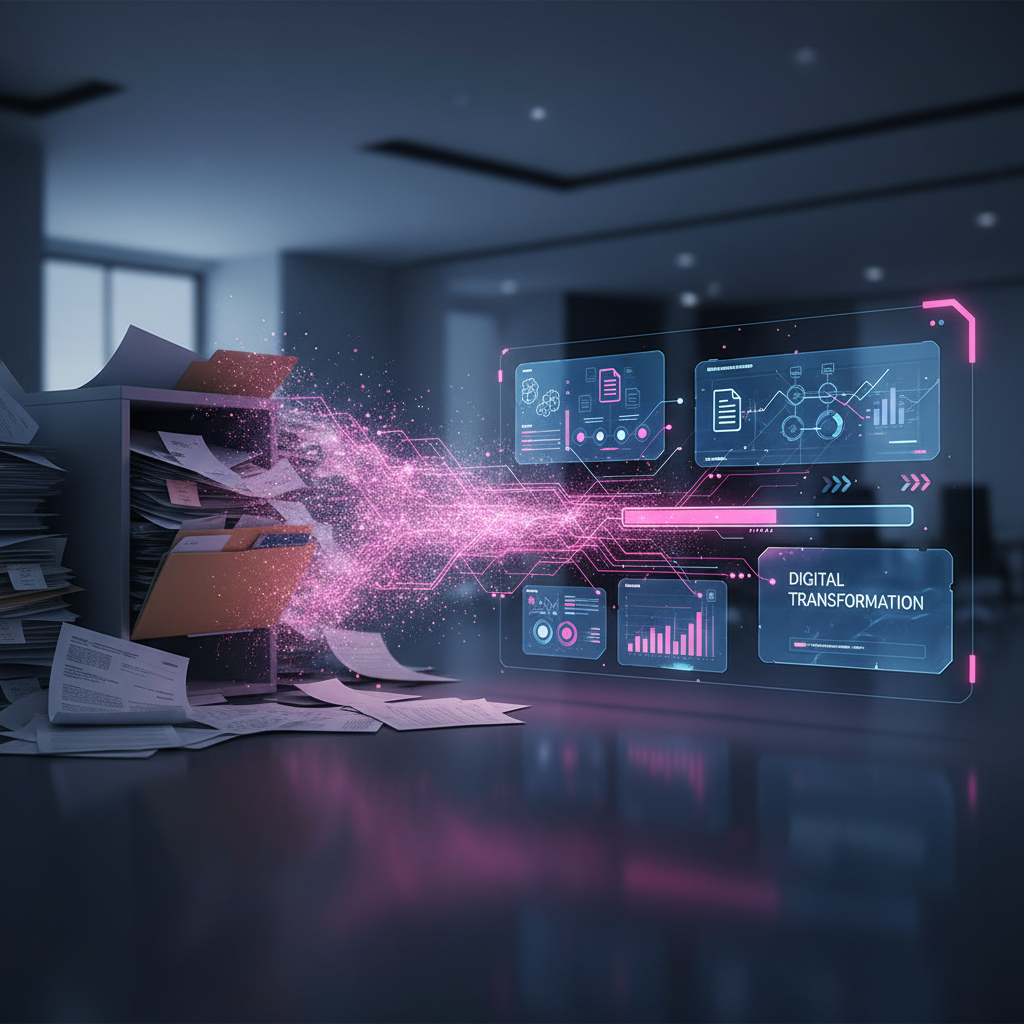
Imagine this scenario. You have just hired a brilliant new developer or a sales manager. They are excited to join your team. It is their first day. They walk into the office, or log in remotely, full of energy. But instead of meeting the team or starting their training, they spend the first four hours filling out forms and photocopying their ID cards. They hand over a stack of papers to the HR manager, who then puts them in a folder. That folder goes into a cabinet. Weeks later, you realize a signature is missing, or a document is blurry.
This is a story that happens in many offices across India. While businesses are moving to the cloud and using advanced software for sales and accounting, the way we handle joining formalities often remains old-fashioned. This is where employee document verification comes in. It is not just about checking papers; it is about starting the employee journey on the right note.
At MYND Integrated Solutions, we see technology as a bridge that connects complex processes with simple outcomes. Today, we want to talk about how you can change this tiring process into a smooth, fast, and secure system. We will explore how technology can streamline employee document verification, making life easier for your HR team and your new hires.
Understanding the Basics: What is Employee Document Verification?
Before we look at the solution, let us understand the task. Employee document verification is the process of collecting, checking, and storing the necessary proofs provided by a new joiner. This usually includes:
- Identity Proof: Aadhar card, PAN card, Passport, or Voter ID.
- Address Proof: Utility bills or rental agreements.
- Educational Certificates: Degree copies, mark sheets, and diplomas.
- Previous Employment Proof: Relieving letters, salary slips, and experience certificates.
Every company needs these documents. You need them for payroll, for legal compliance, and to ensure that the person you hired has the qualifications they claimed during the interview. When you verify these documents properly, you build trust. When you do it poorly, you create risk and confusion.
The Problem with the Manual Way
Many organizations still rely on physical copies or email attachments. A candidate emails a scan of their degree. The HR executive downloads it, looks at it, renames it, and saves it in a folder on their laptop. This sounds simple, but it has many hidden problems:
1. It is Slow: If you are hiring 50 people a month, that is hundreds of documents to open, check, and file. It takes hours of valuable time.
2. High Chance of Error: It is easy to miss a fake document or accept a blurry image when you are tired. Manual checking relies entirely on human attention.
3. Storage Issues: Storing paper files takes up space. Storing files on a laptop is risky if the laptop crashes. Finding an old file during an audit becomes a nightmare.
4. Poor Experience: Candidates today are used to ordering food and booking cabs with one click. Asking them to courier photocopies feels outdated and frustrating.
How Technology Streamlines the Process
The good news is that we do not have to do it the hard way anymore. Modern technology solutions have changed how employee document verification works. By moving from manual checks to digital automation, companies can save time and improve accuracy.
Here are the key technologies that make this possible:
1. centralized Digital Portals
Instead of emails, companies use secure online portals. The candidate gets a login link. They upload their documents directly into the system. The system tells them immediately if the file is too small or the wrong format. This removes the back-and-forth emails. Everything lands in one secure place, accessible by the HR team from anywhere.
2. Optical Character Recognition (OCR)
This is a big word for a simple concept. OCR is technology that allows a computer to “read” an image. When a candidate uploads a photo of their PAN card, the OCR software scans it and automatically extracts the PAN number, name, and date of birth. It fills out the database for you. This means no one has to manually type out data from a document, which stops typing mistakes from happening.
3. API Integrations for Instant Checks
This is where the magic happens. An API (Application Programming Interface) allows two software programs to talk to each other. In the context of employee document verification, your HR system can “talk” to government or institutional databases securely.
For example, when a candidate enters their PAN number, the system can instantly ping the relevant database to check if that PAN is valid and belongs to that person. This happens in seconds. It gives a “Green” or “Red” signal immediately.
4. Artificial Intelligence (AI) for Fraud Detection
Sometimes, people edit images using software to change numbers or names. The human eye might miss a clever edit. However, AI tools can scan the digital file to see if pixels have been tampered with. It acts as an extra layer of safety, flagging suspicious documents for a human expert to review.
A Step-by-Step Guide to a Streamlined Process
So, what does a good process look like? If you decide to upgrade your system, here is how the workflow changes.
Step 1: The Pre-Onboarding Link
As soon as the candidate accepts the offer, they receive a welcome email with a link. They can open this on their phone or laptop. They do not need to wait for their first day.
Step 2: Guided Uploads
The system guides them. “Upload Aadhar Front,” “Upload Aadhar Back,” “Upload Degree.” If the photo is blurry, the system rejects it right there and asks for a clear one. This ensures that when HR sees the documents, they are already readable.
Step 3: Automated Verification
As the documents are uploaded, the background software starts working. It reads the text (OCR) and verifies the numbers against valid databases where possible. It checks for consistency—does the name on the degree match the name on the ID proof?
Step 4: HR Review by Exception
Instead of checking every single detail, the HR manager gets a report. “All documents verified, except the address proof which needs manual review.” The HR manager only spends time on the items that need attention. This cuts down the workload by a huge margin.
Step 5: Secure Digital Storage
Once verified, the documents are encrypted and stored in a secure cloud environment. They are tagged and searchable. If an auditor asks for a file five years later, you can find it in ten seconds.
Why This Matters for Tier 2 and Tier 3 Cities
We often think technology is only for big corporate offices in metro cities. But actually, this technology is even more useful for businesses expanding into Tier 2 and Tier 3 cities in India. As companies open branch offices or hire remote workers from smaller towns, collecting physical papers becomes very hard.
A digital employee document verification process bridges the distance. A new hire in a small town does not need to courier documents to the Head Office in Mumbai or Delhi. They simply use their smartphone. This allows companies to hire talent from anywhere in India without logistical headaches.
Data Privacy: Keeping Information Safe
When we talk about collecting IDs and personal papers, we must talk about safety. In India, data privacy is becoming very important with new laws and regulations. When you store physical files in a cabinet, anyone with a key can see them. Papers can be lost or left on a desk.
Digital solutions offer better security. Access controls mean that only authorized personnel can view sensitive documents. For example, a project manager might need to see a developer’s resume, but they do not need to see their bank details or PAN card. Digital systems allow you to control who sees what. This keeps your company compliant with data privacy laws and makes your employees feel safe.
The Benefits for the Organization
Let us summarize why moving to a tech-enabled process helps the business:
- Cost Savings: You spend less on paper, storage space, courier charges, and administrative hours.
- Scalability: Whether you hire 10 people or 1000 people, the process remains the same. The system handles the load without you needing to hire more HR staff just for paperwork.
- Audit Readiness: In sectors like banking, insurance, or manufacturing, audits are frequent. A digital system keeps you ready 24/7.
- Brand Image: A modern, smooth onboarding process shows new employees that they have joined a professional, forward-thinking company.
Common Challenges and How to Solve Them
Even with technology, there can be challenges. Here is how we address them:
Challenge: Not everyone is tech-savvy.
Solution: The interface must be very simple. It should look like popular social media or shopping apps. If it is easy to read and has large buttons, anyone can use it. Support should also be available via chat or call if a candidate gets stuck.
Challenge: Poor internet connectivity.
Solution: Good software allows candidates to save their progress. If the internet drops, they should not have to start over. They can resume uploading once the connection is back.
Challenge: Verification delays from universities or previous employers.
Solution: While digital checks for IDs are instant, education checks can take time. A good system tracks these pending items and sends automated reminders to the relevant parties so HR doesn’t have to keep calling.
Choosing the Right Partner
Building this technology from scratch is difficult for most companies. It requires a team of developers, security experts, and maintenance. This is why most businesses choose to work with a partner who specializes in business processes and technology.
When looking for a solution or a partner, you should look for:
- Flexibility: Can the system be customized to your specific list of documents?
- Security: Do they have the right certifications for data safety?
- Integration: Can this system talk to your existing HR or Payroll software?
- Expertise: Do they understand the Indian landscape of documentation and compliance?
At MYND, we have spent years refining the intersection of Human Resources and Technology. We understand that technology should not add steps; it should remove them. Our approach to employee document verification is built on the belief that processes should be invisible so that people can be visible.
Conclusion
The way we work is changing. The way we hire is changing. The way we verify the people we hire must change too. Sticking to manual piles of paper is a risk—a risk of lost data, wasted time, and poor employee experience.
Streamlining employee document verification is not just an IT project or an HR task. It is a business decision that affects speed, safety, and reputation. By embracing digital tools, OCR, and secure platforms, you turn a painful chore into a competitive advantage.
Your new employees are excited to start working. Give them a welcome experience that matches that excitement. Let the software handle the paperwork, so you can handle the people.
Ready to transform your employee onboarding and verification process? We are here to help you navigate this digital shift. Explore how our technology solutions can work for your business today.