The Indian business landscape has moved past digital transformation as a goal; it is now the operational baseline. Organizations are no longer just innovating in product development—they are prioritizing financial agility and cash flow resilience. In 2026, this drive for hyper-efficiency is reshaping how companies manage capital and sustain long-term growth.
To maintain a competitive edge in today’s volatile market, businesses must adopt sophisticated financial technologies. However, the fundamental principle of business remains unchanged: maximizing liquidity and shareholder value. This core objective is why effective accounts receivable management has become a board-level priority.
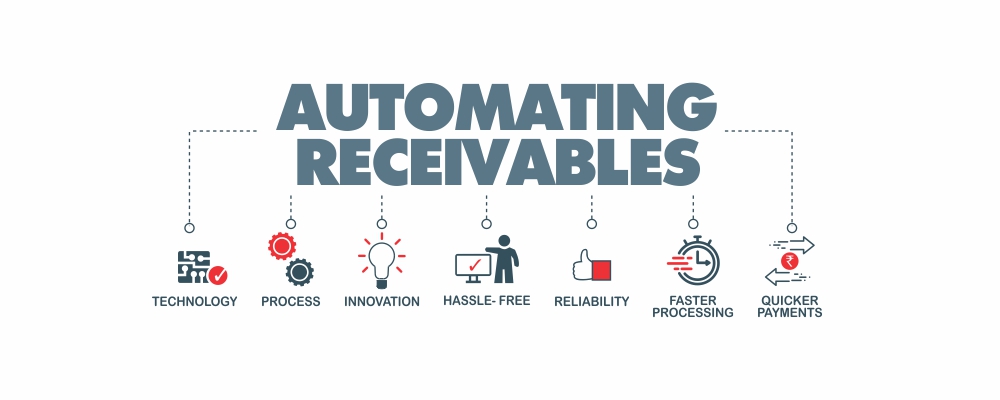
Recovering revenue promptly and reducing Days Sales Outstanding (DSO) is essential to a company’s financial health. Neglecting receivables in an era of high-speed commerce can create terminal financial strain. Despite its importance, Accounts Receivable (AR) processes have historically lagged behind other functions. However, the transition toward AR automation has accelerated significantly, especially within the Indian B2B sector.
Traditional manual methods—relying on spreadsheets, manual invoice follow-ups, and physical reconciliations—are no longer sustainable. While the value of personal relationships remains high in India, the scale of modern business demands a technology-first approach. India’s global economic integration and government-led digital initiatives like the advanced GST e-invoicing mandates and the expansion of TReDS (Trade Receivables Discounting System) are mandating this shift.
Embracing automation in accounts receivable strengthens the ecosystem designed to support businesses. This not only reduces the cost of capital but ensures that organizations remain scalable. Before initiating an automation journey, consider these critical pillars for 2026.
Strategic Scope: What to Automate
Accounts receivable is a complex lifecycle. It encompasses customer onboarding, credit risk assessment, order verification, system entry, procurement coordination, sales team liaison, accurate invoicing, document submission, collection follow-ups, receipt accounting, and final reconciliations.
Comprehensive automation can be daunting. A more effective strategy for 2026 is to prioritize ‘intelligent’ automation in collection follow-ups and predictive analytics. By focusing on redundant, transactional activities first, businesses can see immediate ROI without disrupting core operations.
Another area ripe for transformation is automated cash application. Utilizing AI-driven matching engines to reconcile receipts against open invoices can yield significant man-hour savings and reduce human error.
The 2026 Edge: Predictive AR and Hyper-Automation
As we move through 2026, the focus has shifted from simple workflow automation to predictive intelligence. Modern AR systems now utilize Machine Learning to predict payment behaviors before an invoice even becomes due. By analyzing historical payment patterns, these systems flag ‘at-risk’ accounts, allowing collection teams to intervene proactively rather than reactively.
Furthermore, Generative AI is now being used to draft hyper-personalized communication for dunning. Instead of generic reminders, AI tailors the tone and timing based on the specific customer’s profile, maintaining the delicate balance between firm collection and relationship management.
Timelines & Budgeting for Success
Without clear milestones, automation projects often suffer from ‘scope creep,’ leading to budget overruns. Establishing a phased approach is crucial. Focus on delivering tangible results—such as a 10% reduction in DSO—within the first 90 days rather than pursuing a total system overhaul from the outset.
How to Automate – Insource vs. Outsource
The rapid advancements in AI and Robotics can make the technology landscape seem overwhelming. For organizations focused on core competencies, an experienced managed services partner can provide the necessary guidance and ready-to-deploy technology stacks.
While an external partner may initially lack deep-rooted customer history, this is quickly bridged through data integration and structured onboarding. A significant advantage of a managed services model is the ‘outside-in’ perspective. External experts bring unbiased, best-in-class processes that internal teams, often tethered to ‘how things have always been done,’ might miss.
Additionally, outsourcing ensures access to continuous tech updates. In 2026, staying compliant with evolving RBI regulations and digital payment security standards is a full-time job. A specialized partner ensures your AR process is always compliant and technologically current.
The Conclusion
In summary, to succeed in the 2026 financial landscape:
- Identify high-impact, redundant tasks for immediate automation.
- Leverage predictive analytics to manage credit risk and cash flow.
- Choose a partner that combines technological prowess with process expertise.
2026 Insight: The integration of AR automation with ERP systems is no longer optional. Ensure your automation strategy allows for real-time data flow between sales, finance, and collections to create a single source of truth for your organization’s liquidity.