Featured Snippet:
Finance and accounting automation leverages advanced software and technologies to streamline processes, reduce manual effort, and enhance accuracy across financial operations. Rather than replacing human intelligence, automation serves as a powerful evolutionary tool, empowering finance professionals to shift from repetitive, time-consuming tasks to more strategic, analytical work. This transformation is pivotal for businesses aiming for agility and competitive advantage in 2025 and beyond.
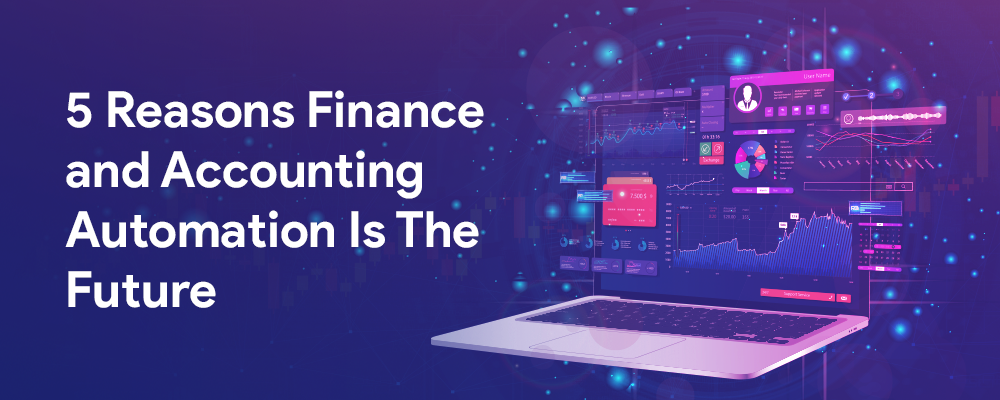
The acceleration of digital transformation across all industries has underscored the critical role of modern software in unlocking the full potential of finance and accounting teams. By automating routine operations, businesses can overcome many of the slow, tedious processes that traditionally hindered productivity. While human intelligence remains indispensable for complex decision-making and strategic oversight, innovative approaches to accounting automation are focused on freeing up valuable time for these higher-value tasks that cannot be delegated to even the most advanced systems. Automation undeniably reduces human effort and time, driving efficiency and precision. Here are five essential reasons why automation in finance and accounting is not just the future, but a necessity for 2025:
1. Enhanced Efficiency and Precision
The advent of sophisticated automation tools, including Robotic Process Automation (RPA) and intelligent online accounting software, has revolutionized the core of finance operations. These technologies drastically reduce manual data entry and repetitive tasks, minimizing human error and significantly speeding up transaction processing, reconciliation, and reporting. This leads to unparalleled levels of precision, ensuring financial data is accurate and reliable for critical business decisions.
2. Empowering Strategic Decision-Making
With automation handling the mundane, finance professionals are liberated to focus on higher-level strategic activities. Instead of spending hours on data collection and reconciliation, teams can dedicate their expertise to advanced analysis, financial modeling, forecasting, and offering insights that drive business growth. This shift transforms the finance department into a strategic partner, actively contributing to innovation and long-term organizational success.
3. Unlocking Scalability and Remote Capabilities with Cloud Computing
The pervasive adoption of cloud-based accounting platforms and Enterprise Resource Planning (ERP) systems ensures infinite access to financial data from any location, at any time. This cloud infrastructure is fundamental for scalability, allowing businesses to expand operations without proportional increases in manual financial overhead. It also facilitates robust remote work models, providing flexibility and continuity for finance teams, which is a hallmark of modern business agility.
4. Driving Innovation with AI, Machine Learning, and Advanced Analytics
Beyond basic automation, the integration of Artificial Intelligence (AI) and Machine Learning (ML) is propelling finance into a new era of predictive analytics. These technologies can identify trends, forecast financial outcomes with greater accuracy, detect anomalies for fraud prevention, and optimize cash flow management. Businesses leveraging AI and ML gain deeper, actionable insights into their financial health, enabling proactive decision-making and sustained competitive advantage.
5. Future-Proofing for Regulatory Compliance and Growth
In an increasingly complex regulatory landscape, automation plays a vital role in ensuring continuous compliance and mitigating risks. Automated systems can be configured to adhere to specific financial regulations, generating audit trails and comprehensive reports with ease. This not only streamlines compliance processes but also positions companies for sustainable growth by building a resilient, transparent, and adaptable financial infrastructure capable of meeting future demands and evolving market conditions.
Navigating the Automation Journey: Key Considerations for 2025
Implementing finance and accounting automation isn’t merely about adopting new software; it’s a strategic overhaul. Organizations must carefully consider the right technologies, data integration complexities, and the necessary upskilling of their existing workforce. The aim is to create a seamless ecosystem where human expertise and technological efficiency converge, driving greater value for the enterprise. This holistic approach ensures that automation delivers its full promise, transforming finance into a truly modern and impactful function.
Wrapping it up
The transformative power of intelligent technology is undeniable in shaping the future of accounting and finance. It is impacting various job roles by shifting the focus from routine data processing to sophisticated analysis and client engagement. The blend of human ingenuity with advanced systems to manage workloads is becoming crucial for bridging the gap between raw data and actionable client insights. As technology continues to evolve, so too will the role and demands placed on finance professionals, requiring continuous adaptation and strategic foresight.